How Laser Engraving Works: A Simple Explanation
Laser engraving is a precise and versatile way to personalize wood products by etching detailed designs using focused light. This article explains the basic technology and steps involved in laser engraving wood so beginners can appreciate the process.
Explore ↗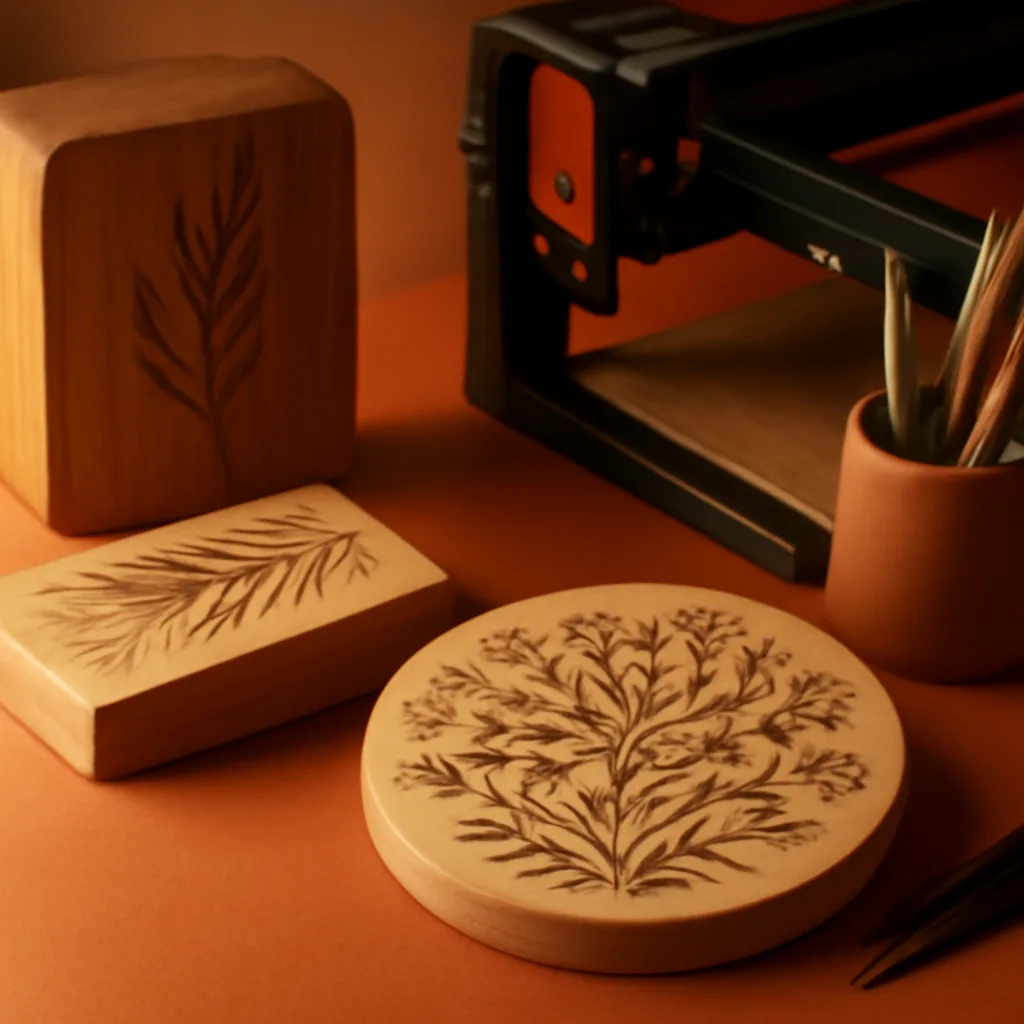
The Basics of Laser Engraving Technology
Laser engraving uses a concentrated beam of light, called a laser, to burn or vaporize the surface of a material, producing a permanent mark. Unlike cutting, engraving alters only the surface without penetrating deeply, creating detailed patterns or text with sharp edges.
The technology involves controlling the laser intensity, speed, and focus to achieve desired effects. Modern engraving machines are computer-controlled, allowing precise reproduction of digital designs.
Wood is a popular material for laser engraving because its surface reacts well to the laser’s heat, producing contrasting dark marks that highlight the engraved design. Different wood types may alter the appearance due to grain and resin content.
- Laser emits a focused light beam to mark surfaces
- Computer software controls the engraving pattern
- Heat from laser burns or vaporizes wood surface
- Precision allows detailed and repeatable designs
Preparing Your Design for Engraving
The engraving process starts with creating a digital design. Common file types include vector graphics or high-resolution images converted into engraving paths.
Design software allows adjustments to contrast, depth, and shading to optimize how the laser interacts with the wood. Simplifying complex images or converting them to grayscale can improve final results.
Once the design file is ready, it is uploaded to the laser engraving machine’s software, which translates it into precise instructions that guide the laser head.
Selecting the right settings, including laser power and speed, depends on the wood species and desired engraving depth and detail. Testing on sample pieces is recommended to refine these parameters.
- Design created digitally, often in vector format
- Software optimizes design for engraving
- Machine software converts design into laser movements
- Settings adjusted based on wood type and desired effect
The Laser Engraving Process Step by Step
1. Setup: The wood piece is secured on the engraving bed to ensure stability during the process.
2. Calibration: The laser focuses on the surface, adjusting distance for optimal engraving clarity.
3. Engraving: The laser moves following the digital design path, turning on and off rapidly to create precise marks.
4. Cooling: As the laser works, the controlled heat may cause slight smoke or fumes, which are extracted by ventilation systems to maintain air quality and accuracy.
5. Inspection: After engraving, the wood is examined for consistency and detail. Additional finishing may be applied to enhance appearance.
- Place and secure wood material
- Focus laser accurately
- Engrave following the design file
- Ventilate to remove fumes
- Check quality of engraving
Materials and Wood Types Commonly Used
Laser engraving works best on softwoods and hardwoods that react well to the heat. Each type of wood produces different shades and textures when engraved, influenced by grain pattern and surface smoothness.
Examples of popular woods include maple, cherry, walnut, and birch. Some woods darken more prominently, offering greater contrast.
Wood surfaces should be clean and flat for best results. Finishes such as varnish or paint may need to be removed before engraving as they can affect laser absorption.
Experimenting with scrap samples of the wood intended for a project helps determine ideal engraving settings and the final appearance.
- Softwoods and hardwoods suitable for engraving
- Grain and color impact engraving contrast
- Surface preparation improves results
- Testing on samples ensures quality
Advantages of Laser Engraving on Wood
Laser engraving is fast, non-contact, and highly accurate, producing intricate designs that would be difficult by hand.
It allows customization in small batches or even one-off pieces without costly tooling changes.
The method creates permanent markings resistant to wear and fading, suitable for decorative art, branding, or functional labeling.
Compared to traditional carving, laser engraving offers cleaner edges, less material waste, and requires minimal physical force, reducing risk to the wood material.
- High precision and detail capability
- Efficient for custom and small runs
- Durable and permanent markings
- Minimal physical contact with material
Discover more

Choosing the Right Wood for Laser Engraving
Discover which wood types are ideal for laser engraving and learn how wood characteristics affect engraving detail and finish.
Customizing Wood Gifts with Laser Engraving
Explore creative ideas and benefits of personalized laser engraved wooden gifts for unique, memorable presents.
Maintaining and Caring for Laser Engraved Wood Products
Discover essential tips to preserve the beauty and longevity of your laser engraved wooden items with effective maintenance and care.
Laser Engraving Safety Tips and Best Practices
Essential safety measures and best practices to follow during laser engraving operations for wood products.
Top Trends in Wood Laser Engraving Design for 2024
Explore the most popular wood laser engraving motifs and styles shaping design trends in 2024 for custom wood products.
How to Order a Custom Laser Engraved Wood Product
Step-by-step guide to ordering personalized laser engraved wood products from GLM Laser Wood.