Benefits of Laser Engraving over Traditional Wood Carving
Laser engraving has revolutionized wood decoration by offering a modern alternative to traditional hand carving. This article compares the benefits of laser engraving versus conventional wood carving to guide your choice for wood personalization and art.
Explore ↗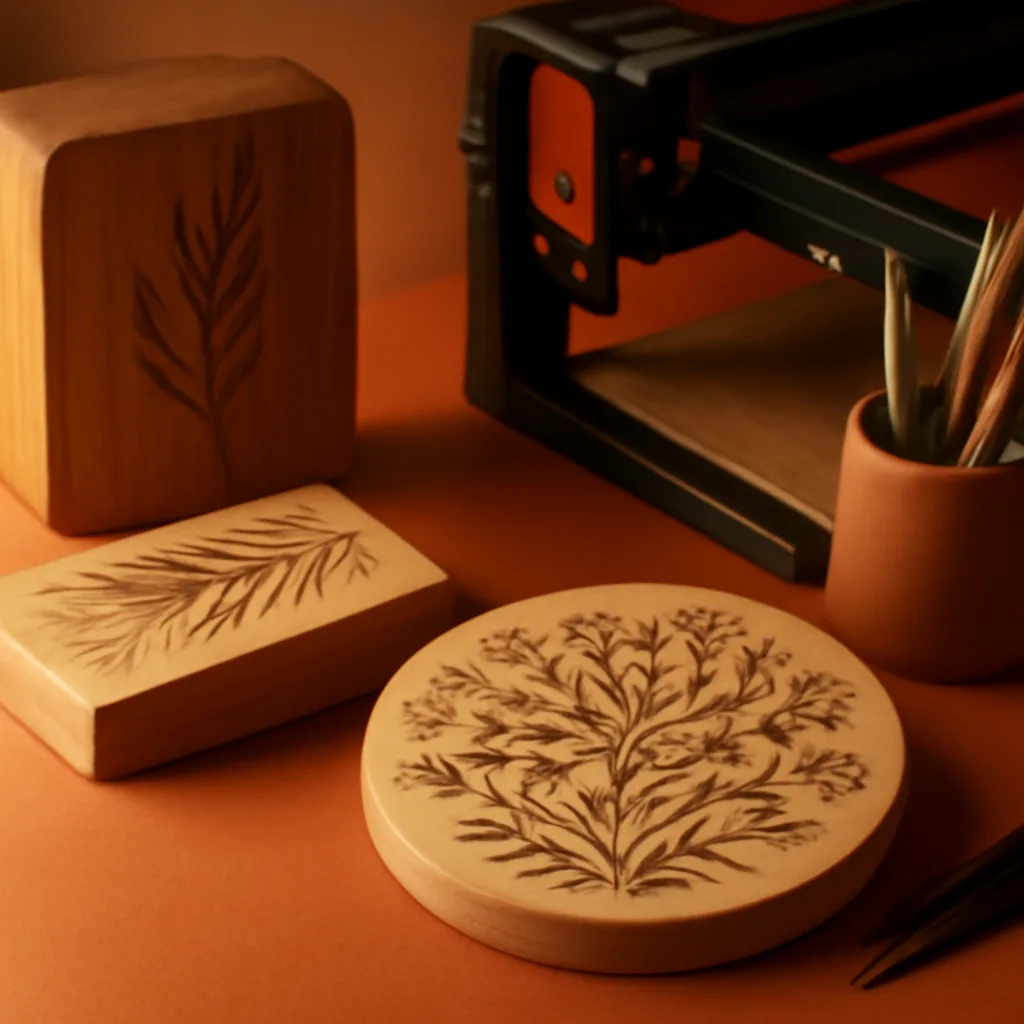
Precision and Detail
Laser engraving technology enables extremely fine and intricate designs with consistent accuracy that is difficult to achieve by hand carving. The computer-controlled laser can execute detailed patterns, text, and images with sharp edges and uniform depth, resulting in professional-grade finishes ideal for delicate and complex artwork.
In contrast, traditional wood carving depends heavily on the skill and steadiness of the artisan, which can lead to variations in detail and depth. While master carvers produce beautiful results, reproducing exact replicas or very small features is challenging.
- Laser engraving offers micron-level precision.
- Consistent results with each piece.
- Ability to reproduce complex or fine designs easily.
Speed and Efficiency
Laser engraving dramatically reduces the time required to decorate or customize wood products compared to manual carving. Once the design is programmed, the laser executes the work swiftly without pauses or fatigue.
Traditional hand carving requires significant time investment, especially for intricate designs. The manual process slows down production and can limit scalability for larger orders or business applications.
For businesses or hobbyists looking for quick turnaround with high-quality results, laser engraving delivers better efficiency.
- Faster production per item.
- Ideal for bulk or customized orders.
- Less physical strain on operators, enabling longer work sessions.
Customization and Versatility
Laser engraving offers the flexibility to work with a diverse range of wood types and finishes. It allows easy adjustments of design size, shape, and location via software, facilitating bespoke customizations.
Hand carving excels in artistic expression and custom one-of-a-kind pieces but is less adaptable when frequent design changes or rapid prototyping are needed.
This technology empowers users to explore diverse design ideas, incorporate logos, and personalize products without retooling or starting from scratch.
- Easily modify designs digitally before engraving.
- Works on various wood grains and thicknesses.
- Enables intricate logos, photographs, and text personalization.
Consistency and Quality Control
Laser engraving provides reliable repeatability across multiple pieces, ensuring uniformity in product lines or gifts. The digital setup allows precise replication of designs without degradation in quality.
Manual carving introduces natural variations, which though sometimes desirable for uniqueness, may not suit commercial or branding needs requiring standardized appearance.
The predictability of laser engraving supports quality control processes and customer satisfaction through consistent output.
- Exact duplicates for matching sets or branded products.
- Reduced rate of errors or defects due to manual inconsistencies.
- Simplifies inventory and stock management.
Cost Considerations
While initial investment in laser engraving equipment can be high, the long-term cost per item often decreases due to reduced labor and faster production.
Traditional carving demands skilled labor, making handmade pieces potentially more expensive based on time and expertise.
For small-scale hobbyists, hand carving may be more accessible upfront, but businesses benefit financially from laser engraving when producing multiple items or custom orders efficiently.
- Lower labor costs with automation.
- Faster job completion reduces overhead.
- Investment balanced by scalability and product variety.
Discover more
Choosing the Right Wood for Laser Engraving
Discover which wood types are ideal for laser engraving and learn how wood characteristics affect engraving detail and finish.
How Laser Engraving Works: A Simple Explanation
Understand the laser engraving process on wood, from design to finished product, explained clearly for beginners.
Customizing Wood Gifts with Laser Engraving
Explore creative ideas and benefits of personalized laser engraved wooden gifts for unique, memorable presents.
Maintaining and Caring for Laser Engraved Wood Products
Discover essential tips to preserve the beauty and longevity of your laser engraved wooden items with effective maintenance and care.
Laser Engraving Safety Tips and Best Practices
Essential safety measures and best practices to follow during laser engraving operations for wood products.
Top Trends in Wood Laser Engraving Design for 2024
Explore the most popular wood laser engraving motifs and styles shaping design trends in 2024 for custom wood products.